
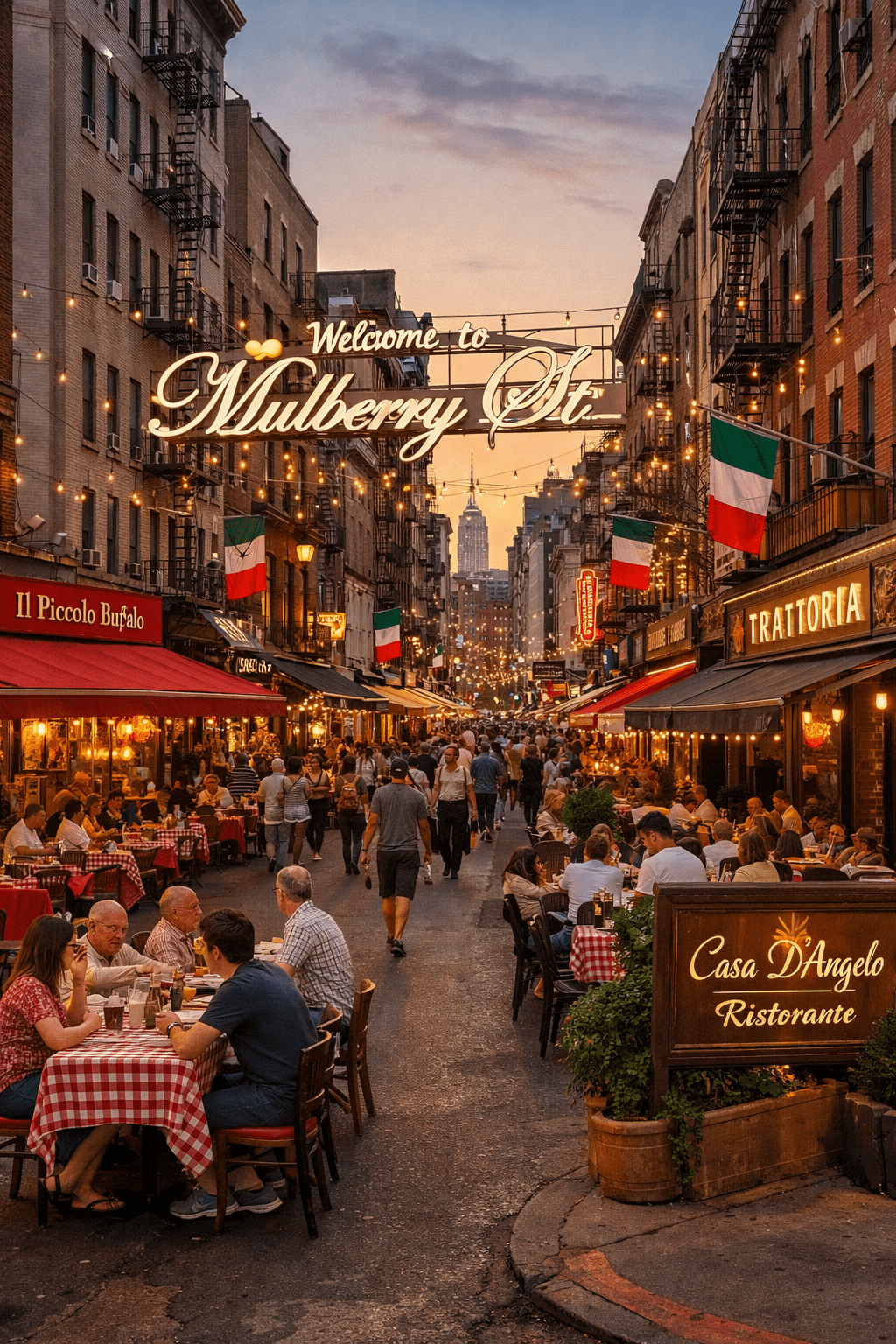
The Historic Heart of Italian Dining in New York
Mulberry Street is the cultural and culinary center of Little Italy, a neighborhood shaped by generations of Italian immigrants who arrived in New York during the late nineteenth century. As large waves of Italians settled in lower Manhattan, they created communities built around family, food, and shared traditions.
At its peak, Little Italy was home to thousands of Italian residents, with restaurants, bakeries, and markets lining the streets and preserving regional cooking traditions brought from Italy.
Today, although the neighborhood has become smaller, Mulberry Street remains the symbolic center of Italian-American dining in New York.
Why Mulberry Street Is Still a Dining Destination
Even as Little Italy has evolved, Mulberry Street continues to attract visitors looking for a traditional Italian dining experience.
The area is known for:
- classic Italian restaurants and trattorias
- fresh pasta and traditional recipes
- outdoor dining and a lively street atmosphere
- a strong connection to Italian-American heritage
For many visitors, dining on Mulberry Street is about more than food. It is about experiencing a piece of New York history where Italian culture and cuisine still define the identity of the neighborhood.
What to Look for When Dining in Little Italy
Not every restaurant in Little Italy offers the same level of authenticity. Over time, the area has become a mix of traditional establishments and tourist-focused venues, making it important to understand what defines a quality dining experience.
When choosing where to eat, look for:
1. Fresh and Handmade Pasta
Restaurants that prepare pasta in-house or emphasise traditional recipes tend to offer a more authentic experience.
2. Clear Italian Influence
Menus that reflect regional Italian dishes, rather than overly generic offerings, are usually a stronger sign of authenticity.
3. Family-Style Dining Options
Sharing dishes is a long-standing part of Italian dining culture and remains common in traditional restaurants.
4. Consistent Local Presence
Restaurants with a strong connection to the neighborhood often reflect the heritage of Little Italy more closely.
The Role of Pasta in the Mulberry Street Experience
Pasta has always been central to Italian dining, and that tradition remains especially strong in Little Italy.
From handmade ravioli to classic spaghetti dishes, pasta reflects both craftsmanship and cultural identity. Italian cuisine values simplicity and balance, where the quality of ingredients and preparation define the dish rather than complexity.
Across Mulberry Street, pasta continues to be one of the most important signals of authenticity and quality.
Dining on Mulberry Street Today
Modern Little Italy is smaller than it once was, now centered around a few blocks of Mulberry Street, but its identity as a food destination remains intact.
Visitors come for:
- traditional Italian meals
- a historic New York atmosphere
- group dining and celebrations
- a connection to Italian-American culture
While the neighborhood has adapted over time, the core experience — Italian food, shared meals, and hospitality — continues to define it.
Experiencing Italian Dining at Casa D’Angelo
Among the restaurants on Mulberry Street, Casa D’Angelo reflects many of the qualities associated with traditional Italian dining in Little Italy.
As a family-owned restaurant offering fresh pasta and classic Italian dishes, it aligns with the long-standing traditions that have shaped the neighborhood’s food culture. Its location on Mulberry Street places it directly within the historic dining corridor that has defined Little Italy for generations.
For visitors exploring the area, restaurants like Casa D’Angelo represent the continuation of Italian culinary heritage in New York.
Why Mulberry Street Still Matters
Mulberry Street is more than a location — it represents a legacy.
Italian immigrants transformed this part of New York into a cultural hub where food played a central role in daily life. Over time, that legacy has evolved, but the importance of dining, tradition, and shared experience remains unchanged.
For anyone looking to experience Italian cuisine in New York, Mulberry Street continues to offer one of the most recognisable and historically significant dining destinations in the city.